Do Invisible Dog Fences Actually Work? We Tested Every Major Brand
I’ve tested every major invisible dog fence on the market — and the honest answer is that some work, some barely work, and some don’t work at all. That’s not a vague disclaimer. I have tape-measured data for every brand, and the gap between the best and worst products is genuinely alarming.
One collar averaged 8 inches of correction drift. Another delivered zero feedback on every single trial. Both cost hundreds of dollars. Both claim to keep your dog safe.
Here’s what actually happened when we tested them.
How We Test (And Why It Matters)
Most invisible fence reviews tell you what the manufacturer says the product does. We measure what it actually does.
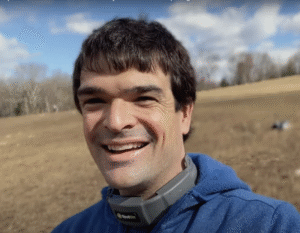
Zach lays a physical rope on the ground as the boundary line. He walks the collar across it and marks where each feedback stage fires — alert, warning, correction. After five trials, he goes back with a tape measure and records the exact distance of every flag from the rope.
That’s how you get numbers like “8 inches of drift” instead of “it seemed to work pretty well.” Our full GPS fence comparison breaks down the trial-by-trial data for every brand.
The reason this matters: a fence that works perfectly in the manufacturer’s demo video might fail in your yard. Trees, terrain, weather, and satellite conditions all affect GPS accuracy. We test under real conditions — partial tree cover, uneven ground — because that’s where these products actually have to perform.
The Results: Brand by Brand
Here’s what we measured across every GPS dog fence we’ve tested. No opinions — just the data.
| SpotOn Nova | Halo Collar 5 | PetSafe Guardian | Satellai | |
|---|---|---|---|---|
| Final Correction Rate | 100% (5/5) | 100% (5/5) | 60% (3/5) | 0% (0/5) |
| Avg Correction Drift | 8 inches | 25 inches | −40 inches | No data |
| Drift Consistency (Std Dev) | 16.6 inches | 79.8 inches | N/A | N/A |
| Warning Stages Missed | 0/5 | 2/5 | 2/5 total failure | 5/5 total failure |
| Test Conditions | Partial tree cover | Partial tree cover | Dense tree cover | Dense tree cover |
Let me translate those numbers into plain English.
SpotOn Nova — It Works
The SpotOn Nova delivered corrections within 8 inches of the actual boundary line on average. Every alert, every warning, every correction fired across all five trials. The standard deviation of 16.6 inches means the correction hits in roughly the same spot every time — your dog can learn exactly where the line is because the line doesn’t move.
That 8-inch number is under partial tree cover, not in a wide-open field. This matters because a collar that works in perfect conditions isn’t telling you much. Trees degrade GPS signals, and that’s where cheaper hardware falls apart.
Halo Collar 5 — It Works, With Caveats
Halo’s latest collar hit 100% on final corrections — your dog will be contained. But the 25-inch average drift and 79.8-inch standard deviation mean the correction zone is less predictable. One approach might fire at 8 inches, the next at 6 feet. That inconsistency can confuse a dog during training.
Halo also missed the intermediate warning tone on 2 of 5 trials. The dog went straight from the initial alert to the correction without the in-between signal. It’s still functional, but the progressive warning system — the part that makes these fences more humane than older technology — didn’t fire reliably.
To be fair, Halo brings real strengths SpotOn doesn’t match: Bluetooth beacons for indoor keep-away zones, Cesar Millan’s training program, and a significantly better tracking app. For a full side-by-side, see our SpotOn and Halo head-to-head breakdown.
PetSafe Guardian — It Failed
Under dense tree cover, the PetSafe Guardian delivered zero boundary feedback on 2 out of 5 trials. Nothing. No alert, no warning, no correction. The dog would have walked straight through the fence with no signal at all.
On the 3 trials that did work, the average correction drift was negative 40 inches — meaning the correction fired after the dog had already crossed the boundary by more than 3 feet. If your boundary runs along a road, that’s a dog in traffic before the collar responds.
We can’t recommend a containment system with a 40% complete failure rate.
Satellai — It Didn’t Work At All
Satellai failed on every single trial. Five approaches, zero feedback at any stage. No warning, no correction, nothing. The collar has health tracking features and a nice app interface, but the core containment function — the reason you’re buying a GPS fence — simply didn’t work in our testing.
What About Traditional Wireless and In-Ground Fences?
GPS fences aren’t the only type of invisible fence. Here’s how the older technologies compare.
In-ground (wired) fences — These use a buried wire that creates a magnetic field. The collar detects the field and delivers correction. They’re reliable within their boundary because the signal is consistent — there’s no GPS drift. The downsides: you need to bury wire around your entire property, wire breaks require digging to find and repair, and the boundary shape is fixed once installed. If you’re on an in-ground system (especially Invisible Fence brand) and considering switching, see our guide to the best Invisible Fence alternatives for a direct comparison.
Basic wireless fences — The PetSafe Wireless Pet Containment System creates a circular boundary from a base station. It’s genuinely simple to set up and works consistently within its range. But the boundary is always a circle, the maximum coverage is about half an acre, and the warning before correction is so brief that most dogs can’t react in time. It’s effective for what it is — a budget option for small, simple yards.
GPS fences — The newest technology. Customizable boundary shapes, no buried wire, portable. But GPS accuracy depends on satellite signal quality, which means tree cover, terrain, and weather all affect performance. That’s why the gap between the best and worst GPS fences is so wide — antenna hardware matters enormously.
Why Some Dogs Still Run Through
Even the best invisible fence can fail if you skip the training. This is the part that most product marketing glosses over.
An invisible fence is a training tool. It teaches your dog where the boundary is through consistent, predictable feedback. Without training, the fence is just a collar that occasionally does something confusing to your dog.
Proper boundary training takes 2 to 4 weeks of short daily sessions. You walk your dog on a leash along the boundary with visual flags, reward them for turning back at the warning tone, and gradually increase their freedom. Our test dog Kona learned the SpotOn boundary in about a week — but she had structured, consistent training every day.
Common reasons dogs run through invisible fences:
- No training period. The owner turned on the fence and expected the dog to figure it out. That’s not how it works.
- High prey drive. A squirrel or deer can override the correction signal in dogs with strong chase instincts. No invisible fence is 100% against high-drive prey response.
- Dead or low battery. Obvious, but it happens. GPS collars need daily charging.
- Poor GPS conditions. Dense tree cover, deep valleys, or heavy storm cover can degrade GPS signals below the threshold where the collar can reliably detect the boundary.
- Wrong collar fit. The contact points need consistent skin contact. Thick fur or a loose collar can prevent the correction from registering.
If your dog is already running through the fence, start with the basics — battery, collar fit, boundary range — before assuming the system doesn’t work.
Invisible Fence vs Physical Fence: Which Is Actually Better?
Neither is universally better. It depends on your property.
| Physical Fence | GPS Invisible Fence | |
|---|---|---|
| Containment Reliability | Absolute (can’t walk through it) | High with good system + training |
| Cost (2 acres) | $3,000–$10,000+ | $500–$1,000 |
| Works on Irregular Terrain | Difficult/expensive | Yes |
| HOA Restrictions | Often limited | Usually allowed |
| Portable | No | Yes |
| Requires Training | No | Yes (2–4 weeks) |
| Stops Determined Dogs | Yes | Not always |
| Keeps Other Animals Out | Yes | No |
If you have a standard suburban yard where a physical fence is allowed and affordable, a physical fence is more reliable. Full stop. No GPS collar matches a solid physical barrier for absolute containment.
But most people shopping for invisible fences have properties where physical fencing doesn’t make sense — large acreage, wooded terrain, HOA restrictions, rental properties, or multiple locations. In those situations, a GPS fence from a brand that actually performs in testing is the best available option.
The Bottom Line
Invisible dog fences work — but “work” has a massive asterisk next to it. The technology is only as good as the specific product you choose and the training you put in.
Here’s what our data actually shows:
- SpotOn Nova — works. 8 inches of drift, zero missed stages, no subscription required for containment. The most reliable GPS fence we’ve tested.
- Halo Collar 5 — works with some inconsistency. 100% final correction rate, but warning stages aren’t fully reliable. Good value with strong extra features.
- PetSafe Guardian — unreliable. 40% failure rate under tree cover disqualifies it for properties where conditions aren’t ideal.
- Satellai — doesn’t work. 100% failure rate in our testing.
- PetSafe Wireless — works for small, simple yards under half an acre. Not a GPS fence, but it’s consistent within its limitations.
- In-ground wired — works reliably but requires installation and isn’t portable.
If you’re going to spend money on an invisible fence, spend it on one that actually performed when we tested it. A fence that fails 40% of the time isn’t 60% effective — it’s a safety risk.
Frequently Asked Questions
Do invisible dog fences actually work?
Yes, but reliability varies dramatically by brand. In our tape-measured testing, SpotOn Nova delivered corrections on 100% of trials with only 8 inches of average drift. Halo Collar 5 also hit 100% on final corrections but averaged 25 inches of drift. PetSafe Guardian failed to deliver any feedback on 40% of trials under tree cover. Satellai failed on 100% of trials. The technology works — but only if you pick the right system and invest in proper training.
What is the failure rate of invisible dog fences?
It depends on the brand. In our testing, SpotOn Nova had a 0% failure rate across all warning stages. Halo Collar 5 missed the intermediate warning on 40% of trials but still delivered final corrections every time. PetSafe Guardian had a 40% complete failure rate — no feedback at all on 2 of 5 trials. Satellai had a 100% failure rate. Budget GPS collars can fail when conditions aren’t ideal.
Do GPS dog fences work in the woods?
Some do, some don’t. SpotOn Nova averaged 8 inches of correction drift under partial tree cover — the tightest we’ve measured. Halo Collar 5 averaged 25 inches under the same conditions. PetSafe Guardian failed entirely on 2 of 5 trials under denser cover. Tree canopy degrades GPS signals, so a fence that works fine in an open yard may fail under trees. Antenna quality is the key differentiator.
How long does it take for a dog to learn an invisible fence?
Most dogs learn the boundary within 2 to 4 weeks of consistent short training sessions. Our test dog Kona learned the SpotOn boundary in about a week. The training involves walking your dog on a leash along the boundary with visual flags, rewarding them for turning back at the warning tone, and gradually increasing freedom. No invisible fence is plug-and-play — training is required.
Are invisible fences better than physical fences?
Neither is universally better. Physical fences provide absolute containment but cost $3,000 to $10,000+ for larger properties and may violate HOA rules. Invisible fences are more affordable, work on irregular terrain, and are portable — but they require training and won’t physically stop a determined dog. For large or rural properties where physical fencing isn’t practical, a reliable GPS fence like SpotOn is the next best option.