SpotOn vs PetSafe Guardian 2.0: Tested Head-to-Head (2026)
TL;DR
SpotOn GPS Fence is the clear winner over the PetSafe Guardian 2.0. In our boundary testing under dense tree cover, SpotOn delivered feedback on all five trials — every alert, every warning, every correction fired. PetSafe Guardian 2.0 completely failed to deliver any boundary feedback in two out of five tests. That’s a 40% complete failure rate on the one job a GPS fence needs to do.
90-day money-back guarantee. Free shipping.
| GPS Fence | Score | Band | Reliability /30 |
Consistency /30 |
Accuracy /25 |
Warnings /15 |
|---|---|---|---|---|---|---|
| SpotOn Nova | 93/100 | Exceptional | 30 | 25 | 23 | 15 |
| PetSafe Guardian | 42/100 | Weak | 18 | 0 | 15 | 9 |
SpotOn vs PetSafe Guardian: Head-to-Head
| SpotOn GPS Fence | PetSafe Guardian 2.0 | |
|---|---|---|
| Fence Score | 93/100 (Exceptional) | 42/100 (Weak) |
| Feedback Delivery | 5/5 trials (100%) | 3/5 trials (60%) |
| Complete Failures | 0 out of 5 | 2 out of 5 |
| Feedback Stages | 3 stages (alert, warning, correction) | 2 stages (alert + correction) |
| Boundary Setup | Walk the line or app | App drawing only |
| Subscription | Not required for containment | Required |
| Saved Fences | Unlimited | Up to 50 |
| Min Property Size | ⅓ acre | ½ acre |
| Training Support | In-app modules + free live session | My PetSafe app + training guide |
| Customer Support | US-based phone support | Standard |
| Price | $999 ($919 with discount) | ~$600 (verify current price) |
How Did We Test SpotOn vs PetSafe Guardian?
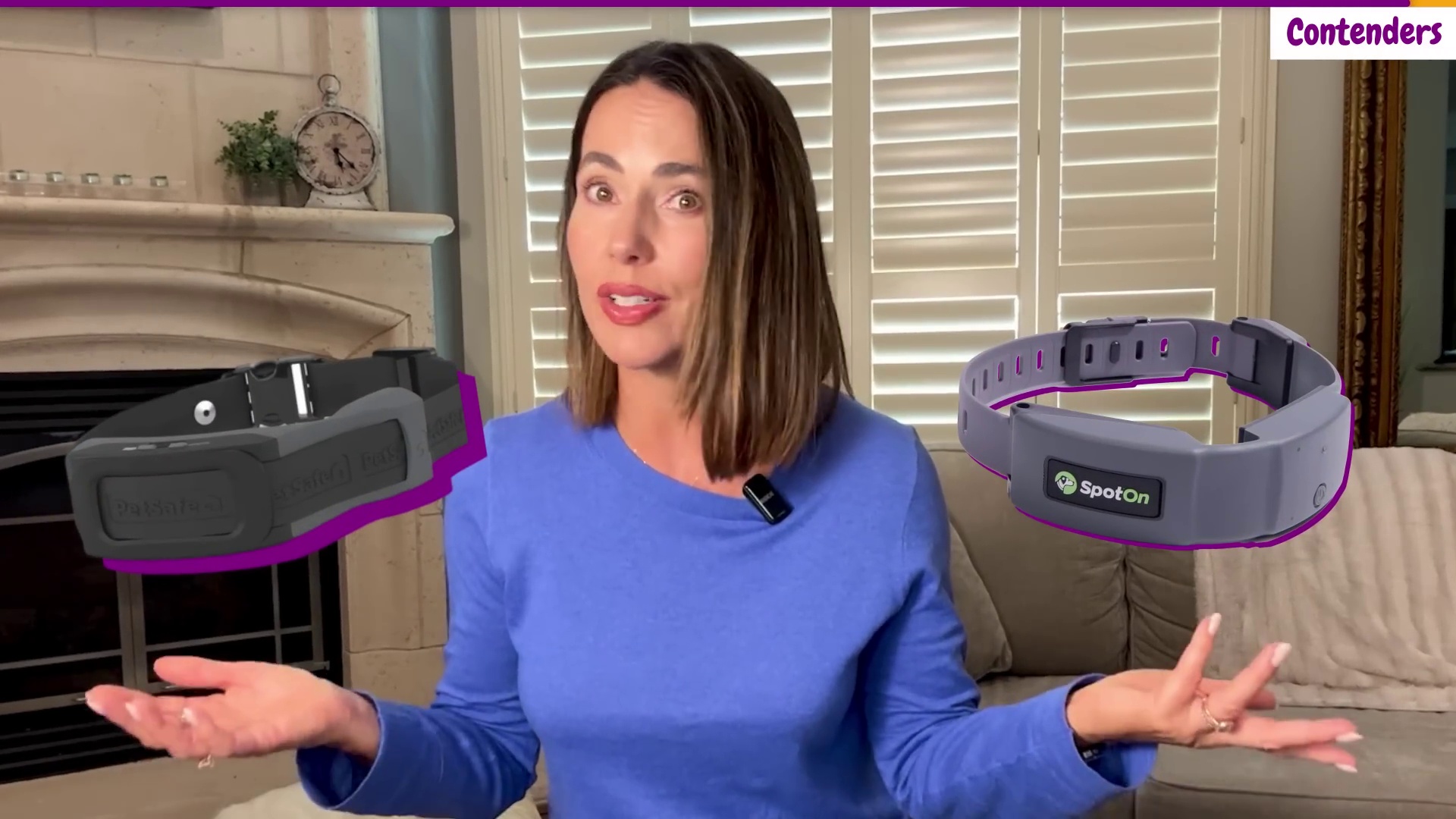
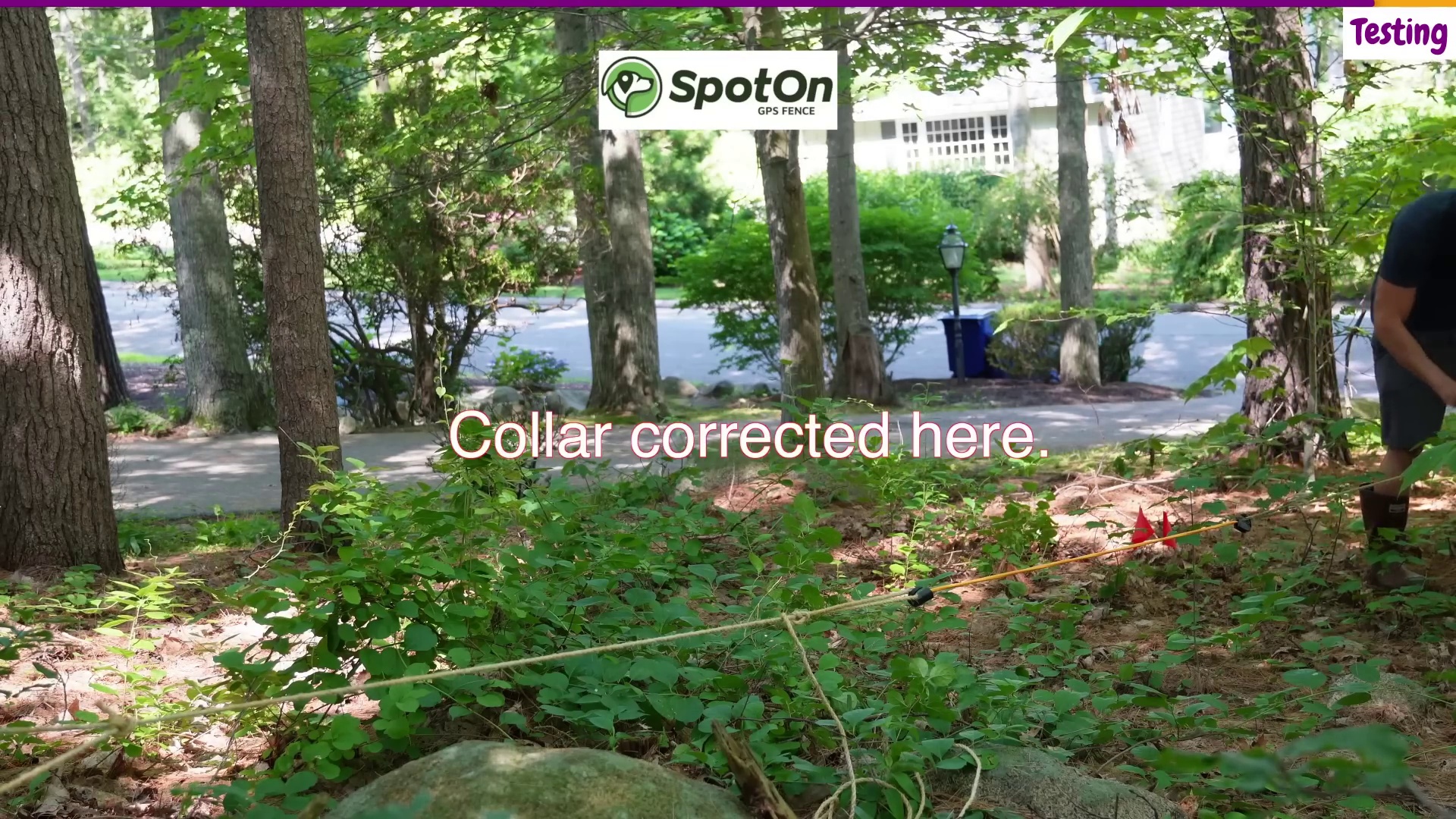
We conducted rigorous boundary testing under dense tree cover — the most challenging GPS conditions you can encounter. Zach set up a rope boundary and walked each collar through five trials, marking exactly where boundary feedback was delivered with colored flags.
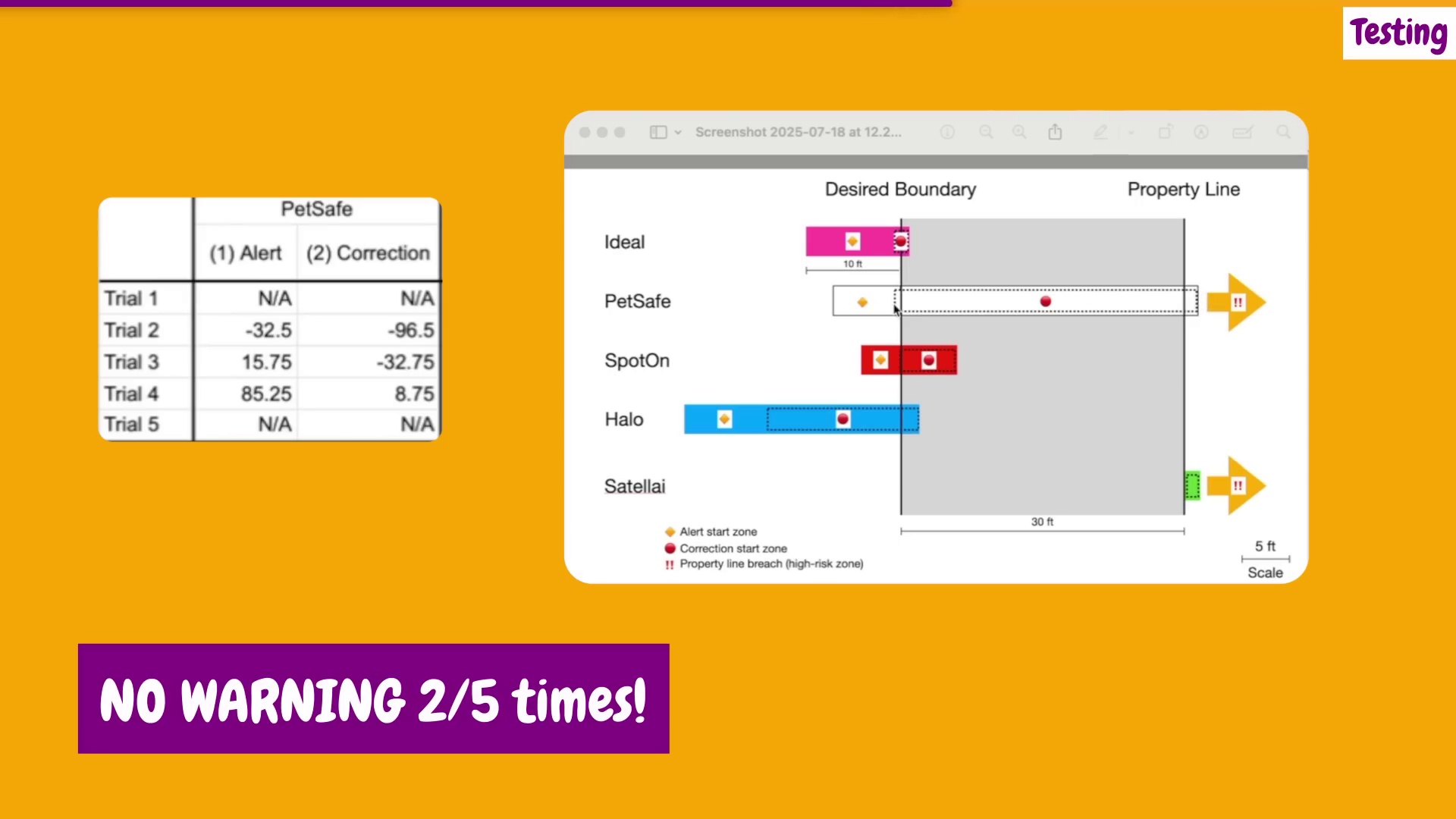
We measured three things: where each feedback stage fired (drift), whether it fired consistently across trials (standard deviation), and whether the collar delivered any feedback at all (completion rate).
Testing conditions disclosure: The dense-cover stress test (July 2025) was a genuine head-to-head — SpotOn Omni, Halo Collar 4, PetSafe Guardian, and Satellai all tested on the same property, same day, under identical dense tree cover. The Fence Score also incorporates SpotOn Nova data from partial tree cover testing (November 2025). PetSafe uses a two-stage warning system (alert + correction only, no intermediate warning vibration) — this is a design choice, not a scored failure.

90-day money-back guarantee. Free shipping.
Did SpotOn Deliver on Every Trial?
Yes. The SpotOn Omni delivered feedback on every single trial under dense tree cover — a 0% failure rate. All three feedback stages — alert, warning, and correction — fired on every trial. Accuracy was mixed under those difficult conditions (see data below), but the collar never failed to respond.
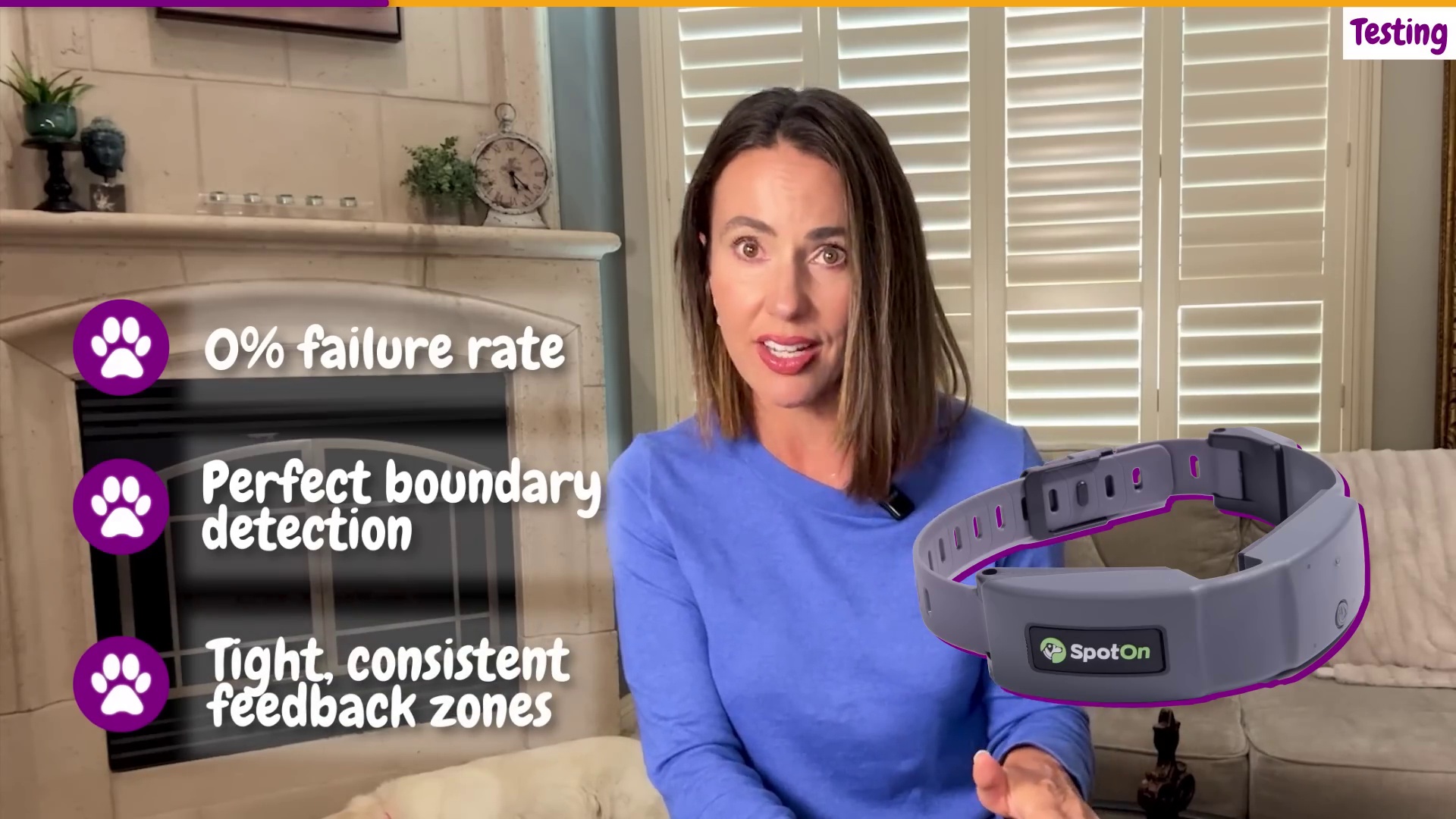
In the July 2025 dense-cover stress test, the SpotOn Omni fired the correction on all 5 trials. Accuracy was mixed under those difficult conditions (−38.7” average drift, 3/5 trials past the boundary), but the collar never failed to respond. The newer SpotOn Nova performed even better under partial tree cover — 8 inches of average drift with a 16.6-inch standard deviation and zero past-boundary results.
What makes SpotOn work:
- Walk-the-line boundary setup. You walk your property line with the collar — the GPS tracks your exact path. What you walk is what you get.
- No subscription required for containment. The fence works permanently. An optional subscription adds live GPS tracking.
- Three-stage progressive warnings. Alert tone → warning vibration → correction gives your dog multiple chances to turn back.
- US-based phone support. Free 1-on-1 training session included with every collar.
How Did PetSafe Guardian Perform?
PetSafe Guardian 2.0 failed to deliver any boundary feedback in two out of five trials — a 40% critical failure rate. In the three working trials, correction drift ranged from +8.75” to −96.5” — a wide spread that makes the correction zone unpredictable even when it does fire.
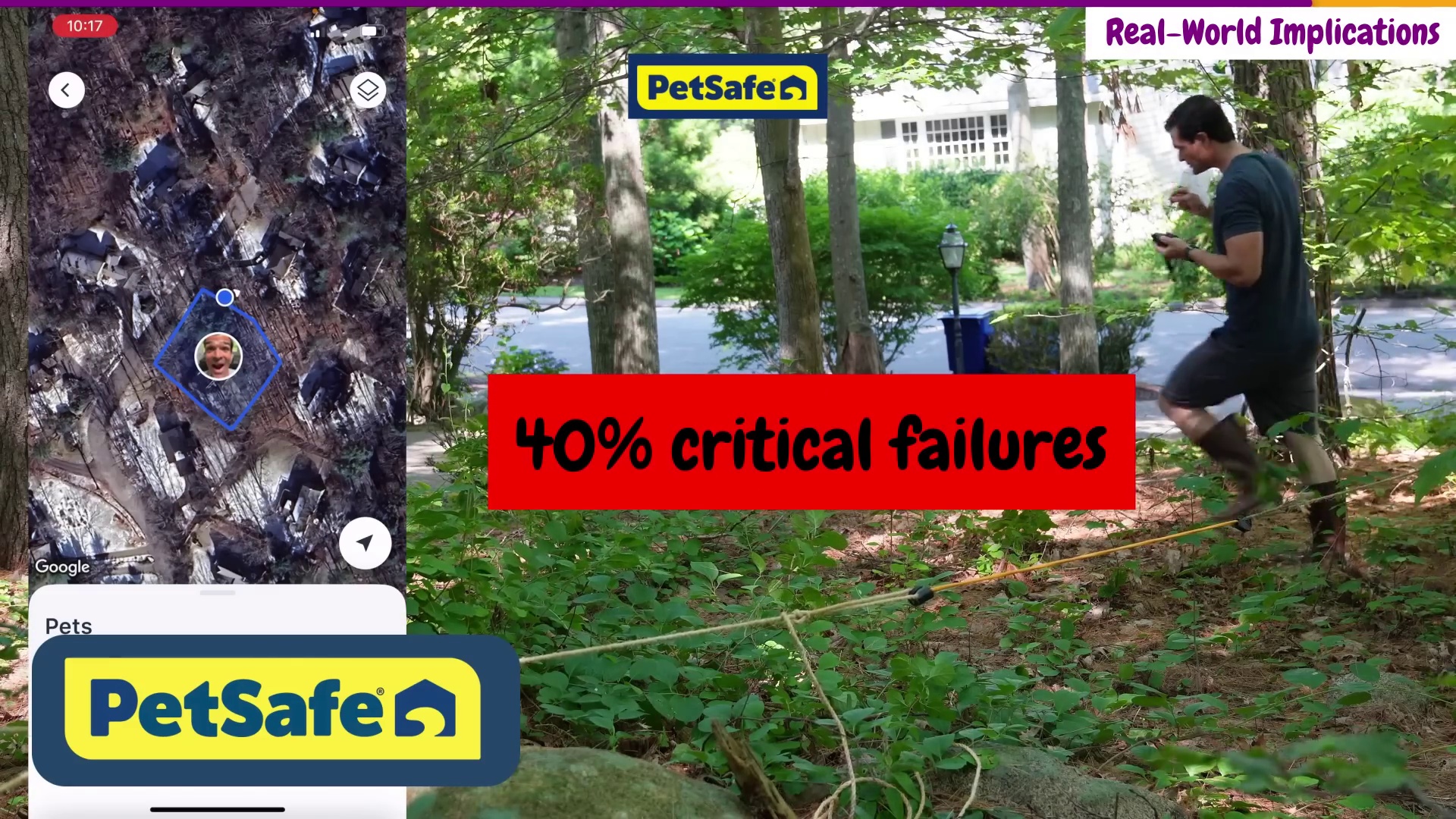
A 40% failure rate means two out of every five times your dog approaches a boundary, they get no warning at all — no alert, no correction, nothing. They just walk through the invisible fence like it doesn’t exist.
To be fair:
PetSafe was tested under dense tree cover — deliberately harder conditions where GPS signals are weakest. Its accuracy and consistency would likely score higher under partial tree cover or open sky. PetSafe also uses a two-stage warning system by design (alert + correction, no intermediate warning vibration), which isn’t a flaw — it’s just a different approach. But the 40% complete failure rate isn’t about missing a warning stage; it’s about the collar delivering zero feedback of any kind.
Why Does Boundary Setup Method Matter?
SpotOn eliminates the guesswork that can lead to boundaries being set in wrong locations. You walk the exact boundary you want with the collar in hand. The GPS tracks your path and creates a precise boundary based on actual satellite data from that specific location.
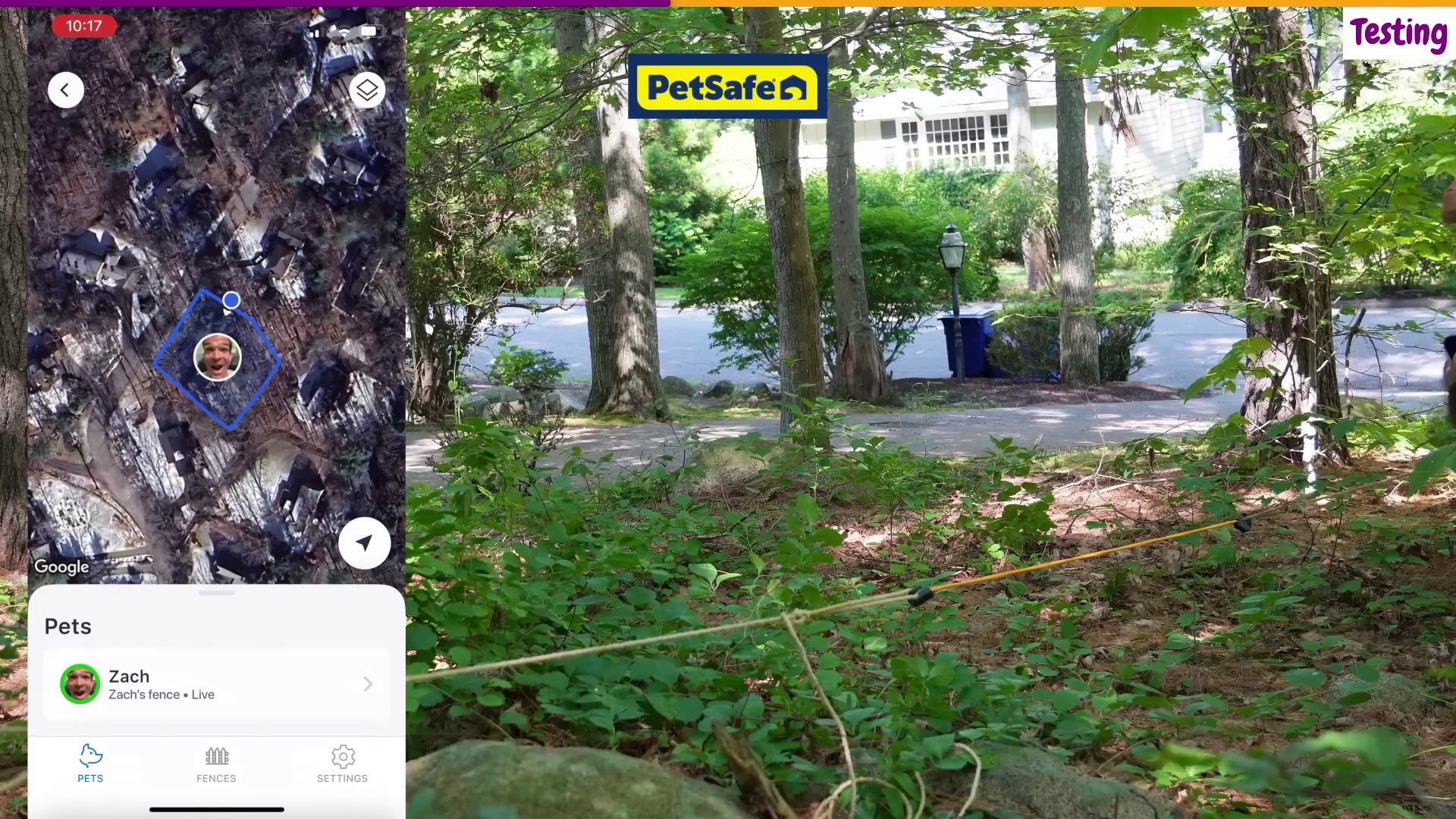
PetSafe Guardian 2.0 requires you to draw boundaries on a map in the app. You zoom in as far as the interface allows, drop pins where you think the boundary should be, test it, discover it’s wrong, adjust, test again, and repeat until you get close. This introduces human error into the boundary-setting process before the GPS accuracy issues even come into play.
Is SpotOn Worth the Higher Price?
Yes — if containment is your priority. SpotOn costs $999 ($919 with discount) while PetSafe Guardian 2.0 is priced lower. But consider what you’re actually paying for:
- SpotOn: 100% feedback delivery in our testing. No subscription for containment. Walk-the-line boundary setup. Unlimited saved fences.
- PetSafe: 60% feedback delivery in our testing. Subscription required. App-only boundary setup. Up to 50 saved fences.
A single emergency vet visit after an escape costs $1,000–$5,000+. The price difference between the two collars is insurance against a system that failed 40% of the time in our testing.
SpotOn also has no mandatory subscription for containment, while PetSafe requires one. Over 3 years, that subscription cost narrows the price gap significantly.
- 100% feedback delivery in dense-cover testing
- Walk-the-line boundary setup eliminates map-alignment error
- No subscription required for containment
- 3-stage progressive warning system
- Unlimited saved fences, ⅓ acre minimum
- US-based phone support + free training
- $999 upfront cost ($919 with discount)
- Bulky collar — minimum 10" neck
- Dense-cover accuracy was mixed (−38.7" avg drift with Omni)
- App lacks Halo's polish and real-time tracking
- Lower upfront price
- Up to 50 saved fences
- Lighter collar design
- 40% complete failure rate under dense tree cover
- Wide correction spread in working trials (+8.75" to −96.5")
- App-only boundary setup (no walk-the-line)
- Subscription required, ½ acre minimum
Bottom Line
SpotOn is the GPS dog fence we recommend over PetSafe Guardian 2.0. It delivered feedback on every trial, offers walk-the-line boundary setup, and doesn’t require a subscription for containment. The data is clear: a 0% failure rate versus 40%.
PetSafe Guardian may work in easier conditions — open sky, flat terrain — but a 40% complete failure rate under dense tree cover means you need to know your environment before trusting it. If your property has any tree cover or GPS challenges, SpotOn is the safer investment.
For the full SpotOn review with trial-by-trial data, see our SpotOn GPS Dog Fence Review. For how it compares to Halo, see SpotOn vs Halo Collar.
90-day money-back guarantee. Free shipping.
Reviewer: Zach Lovatt (95+ hours of GPS dog fence testing)
Long-term tester: Kristen Simoes (3+ years daily use with Kona)
Dense-cover stress test (Jul 2025): SpotOn Omni, Halo Collar 4, PetSafe Guardian, Satellai — all same property, same day
SpotOn Nova: partial tree cover (Nov 2025) · PetSafe Guardian: dense tree cover (Jul 2025)
Method: Tape-measured boundary testing, 5 trials per collar, flagged drop points
Boundary setup: SpotOn tested with walk-the-line (fence = rope). PetSafe tested with map-based placement (potential alignment gap).
PetSafe uses a two-stage warning system (alert + correction only) — this is a design choice, not a scored failure.
Scoring: Pampered Pup Fence Score (Reliability 30 + Consistency 30 + Accuracy 25 + Warning Completeness 15)
Disclosure: This page contains affiliate links. We earn a commission if you purchase through our links at no extra cost to you. Our testing methodology and scores are independent of affiliate relationships.
Full methodology: How We Test GPS Dog Fences
Frequently Asked Questions
Is SpotOn better than PetSafe Guardian?
Yes. In our boundary testing under dense tree cover, SpotOn delivered feedback on all five trials while PetSafe Guardian 2.0 had a 40% complete failure rate — no feedback at all in two out of five tests. SpotOn also offers walk-the-line boundary setup, no required subscription for containment, and US-based phone support.
Is the PetSafe Guardian 2.0 accurate?
In our controlled testing under dense tree cover, the PetSafe Guardian 2.0 completely failed to deliver any feedback in two out of five trials — a 40% critical failure rate. On the three trials that did fire, correction drift ranged from +8.75 inches to −96.5 inches, making the correction zone unpredictable even when it worked. The combination of complete failures and wide drift spread makes it unreliable for boundary containment. Its accuracy would likely improve under partial tree cover or open sky.
What is the most accurate GPS dog fence?
The SpotOn Nova is the most accurate GPS dog fence we’ve tested — 8 inches of average correction drift with a 16.6-inch standard deviation under partial tree cover. It fired every feedback stage on every trial. No other GPS fence we’ve tested comes close to that consistency.
Is SpotOn GPS Fence worth the price?
Based on our testing, yes. SpotOn costs more upfront, but it delivered reliable boundary feedback while PetSafe failed 40% of the time. A single emergency vet visit after an escape costs more than the price difference. SpotOn also doesn’t require a subscription for core containment, which reduces long-term costs.
How does SpotOn create boundaries compared to PetSafe?
SpotOn lets you walk your property perimeter with the collar, and the GPS tracks your exact path to create the boundary — what you walk is what you get. PetSafe Guardian requires you to draw boundaries on a map in the app by dropping pins, which introduces guesswork and human error before GPS accuracy even comes into play.