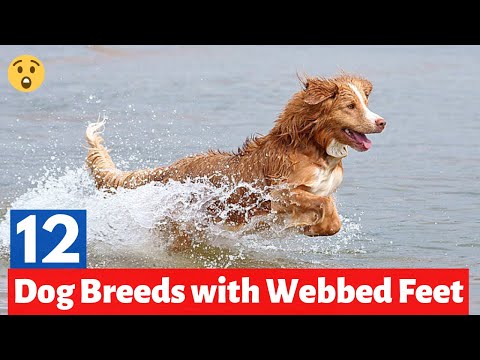
10 Dogs With Webbed Feet — Why These Breeds Need a GPS Fence

Key Takeaways
-
Dogs with webbed feet were bred for water, hunting, and rough terrain — they’re athletic, high-energy, and hardwired to roam.
-
These breeds are among the most common escape artists. A physical fence won’t stop a Lab that smells a pond or a Weimaraner chasing a bird.
-
A GPS dog fence gives webbed-foot breeds the freedom to explore your property while keeping them safely contained — no buried wires, no physical barriers to maintain.
If you take a close look at your dog’s paws, you may notice a thin membrane between each toe. Dogs with webbed feet — or more accurately, webbed paws — are more common than most people realize. All dogs are born with some webbing, but certain breeds were selectively bred to keep it because it makes them powerful swimmers, better diggers, and more efficient on rough terrain.
The problem? These same traits that make webbed-foot breeds incredible outdoors also make them the most likely to escape your yard. A Labrador that catches a scent near water, a Weimaraner locked onto a bird, a Dachshund digging under your fence — these dogs were built to go, and a standard fence often isn’t enough.
That’s why webbed-foot breed owners are some of the most common GPS fence buyers we hear from. A GPS fence creates an invisible boundary that travels with your dog and works even in open yards, near water, and across terrain where physical fences aren’t practical.
10 Popular Dog Breeds With Webbed Feet
1. Labrador Retriever
The most registered breed in the AKC, Labs were originally bred in Newfoundland to retrieve fish and haul nets from frigid water. Their fully webbed paws, waterproof coat, and rudder-like tail make them natural swimmers. The Coast Guard still uses Labs for ocean search and rescue.
Why they escape: Labs are driven by scent and water. If there’s a creek, pond, or interesting smell beyond your fence line, a Lab will find a way to it. They’re strong enough to push through weak spots in physical fencing and smart enough to find gaps.
GPS fence fit: Labs are the ideal GPS fence candidate — large enough for every collar on the market, responsive to training, and active enough to need a large containment area. A GPS fence lets them run a 5-acre property without you worrying about the pond next door.
2. Golden Retriever
Originally bred in Scotland from a line of water spaniels and retrievers, Goldens have webbed feet built for treading cold water. They’re famous for jumping into water without hesitation to rescue drowning swimmers — even baby deer.
Why they escape: Goldens are friendly to a fault. They’ll wander off to greet a neighbor, follow a child, or chase a ball into the next yard. Their prey drive around waterfowl is also strong.
GPS fence fit: Their eagerness to please makes Goldens one of the fastest breeds to train on a GPS fence. Most learn the boundary within the first week of tone warnings.
3. Newfoundland
The ancestor of many water dog breeds, Newfoundlands are massive dogs built for water rescue in freezing Canadian seas. Their partially webbed paws, waterproof coat, and incredible strength let them haul heavy fishing nets and rescue drowning swimmers.
Why they escape: At 100–150 lbs, a Newfoundland can push through or over most residential fences. They’re gentle giants, but when they want to go somewhere, not much stops them.
GPS fence fit: Newfoundlands need a collar that fits large necks. SpotOn supports necks up to 26”+ with extensions, making it the best option for giant breeds.
4. German Shorthaired Pointer
Perhaps the most versatile webbed-foot breed, GSPs are waterdogs, pointers, and retrievers rolled into one. Their webbed feet connect to tireless legs that power them through water and across muddy terrain without slowing down.
Why they escape: GSPs have extremely high energy and a strong prey drive. A bored GSP will find a way out of almost any yard. They’re also fast — once they’re out, catching them is a challenge.
GPS fence fit: GSPs need large containment areas and benefit from GPS fences that work across multiple properties (hunting land, home, cabin). The portability of GPS fences is a major advantage for hunting breed owners.
5. Dachshund
The “wiener dog” has webbed feet for a reason most people don’t expect — digging. Bred to track and kill badgers in their underground dens, Dachshunds needed to dig faster than a badger could burrow. Their webbed paws double as shovels.
Why they escape: Dachshunds dig under fences. It’s not a question of if, but when. Their low profile and determination make them master escape artists from below.
GPS fence fit: At 10”+ neck, Dachshunds fit most GPS collars. The Halo Collar 5 starts at 8” neck and 10+ lbs, making it the best fit for smaller breeds. Since GPS fences don’t have a physical barrier to dig under, they solve the Dachshund escape problem at the root.
6. Weimaraner
Called the “grey ghost,” Weimaraners were historically used to hunt bears and mountain lions. Their sleek, athletic bodies and strong webbed feet let them glide through water and power through marshy terrain.
Why they escape: Weimaraners have separation anxiety and extremely high energy. Left alone in a yard, they’ll climb, jump, or dig their way out. They’re also tall enough to clear many 4-foot fences.
GPS fence fit: The progressive warning system on GPS fences (tone → vibration → static) works well with Weimaraners because it gives them a chance to self-correct before any correction — important for anxiety-prone breeds.
7. Otterhound
One of the rarer webbed-foot breeds, the Otterhound has a waterproof coat and will dive underwater headfirst just for fun. Originally bred to hunt otters and mink, their sensitive noses and love of water make them natural trackers.
Why they escape: Otterhounds follow their nose wherever it leads. Their scent drive is strong enough to override recall training, especially near water.
GPS fence fit: For scent-driven breeds, the GPS fence’s consistent boundary enforcement is critical — it works even when your dog’s nose is telling them to keep going.
8. Chesapeake Bay Retriever
Bred in Maryland and Virginia for duck hunting in below-freezing water, the Chesapeake Bay Retriever was created by crossing hounds with Newfoundlands. Their webbed feet and thick coat made them prized by wealthy duck hunters in the 1800s.
Why they escape: Chessies are independent and stubborn. They’ll respect a boundary on their terms, but when a flock of geese flies over, training takes a backseat to instinct.
GPS fence fit: The combination of GPS containment and live tracking means you can let a Chessie run your waterfront property while getting an alert the moment they push past the boundary.
9. Portuguese Water Dog
Used by Portuguese fishermen to herd fish, retrieve tackle, and carry messages between ships, the Portuguese Water Dog has big webbed feet and a waterproof coat built for cold seawater. They’re muscular, athletic, and tireless in the water.
Why they escape: As working dogs, they need a job. Without sufficient exercise and stimulation, they’ll create their own entertainment — often on the other side of your fence.
GPS fence fit: GPS fences that cover large properties give Portuguese Water Dogs the space they need to burn energy without escaping. Drawing a boundary that includes a safe water area (but excludes a road or neighbor’s property) is something only a GPS fence can do.
10. Redbone Coonhound
Bred in the Southern US for tracking raccoons through swamps and river bottoms at night, the Redbone Coonhound’s webbed feet keep them from sinking in mud while chasing prey through water crossings. They’re vocal, determined, and built for endurance.
Why they escape: Coonhounds are among the hardest breeds to contain. Their tracking instinct is nearly impossible to override, and they’ll follow a scent trail for miles if given the chance.
GPS fence fit: For hound breeds, the escape alert and live GPS tracking features are just as important as containment. Even the best-trained Coonhound may occasionally push through a boundary on a hot scent trail — knowing exactly where they are lets you bring them home safely.
Webbed Feet vs. Non-Webbed: Why It Matters for Containment
Not all dog paws are the same. There are three main types:
- Cat’s feet — round, compact paws built for endurance and stability. Breeds with cat’s feet (like Akitas) tend to be more territorial and less likely to roam.
- Hare feet — long paws with extended middle toes, built for speed. Whippets and Greyhounds have these.
- Webbed feet — extra membrane between toes for swimming and terrain traversal. These breeds are the roamers.
The common thread among webbed-foot breeds is that they were bred to cover ground — through water, mud, brush, and rough terrain. That same drive makes them the breeds most likely to test your containment solution. A GPS invisible fence handles this because the boundary moves with the collar, not the terrain.
Why GPS Fences Work Better Than Physical Fences for Water Dogs
Physical fences have three failure modes that webbed-foot breeds exploit:
- Digging under. Dachshunds, Coonhounds, and terrier-adjacent breeds dig under fences routinely.
- Jumping or climbing over. Weimaraners, GSPs, and other athletic breeds can clear 4–5 foot fences.
- Pushing through. Newfoundlands, Labs, and other large breeds can break through weak spots or push open gates.
GPS fences eliminate all three because there’s no physical barrier to breach. The containment is in the collar, and the boundary is enforced consistently by satellite positioning — whether your dog is near water, in the woods, or in an open field.
For properties near water, GPS fences also let you draw boundaries that include safe water access while keeping your dog away from roads, cliffs, or neighboring properties. You can’t do that with a physical fence.
Frequently Asked Questions
What breeds of dogs have webbed feet?
Labrador Retrievers, Golden Retrievers, Newfoundlands, German Shorthaired Pointers, Dachshunds, Weimaraners, Otterhounds, Chesapeake Bay Retrievers, Portuguese Water Dogs, and Redbone Coonhounds all have prominent webbing. Many other breeds have partial webbing as well.
Why do dogs with webbed feet escape more often?
Webbed-foot breeds were selectively bred for swimming, hunting, and traversing rough terrain. That same drive to explore water and chase prey makes them more likely to test and breach physical containment. Their athletic build, high energy, and strong instincts give them the tools to dig under, jump over, or push through traditional fences.
What’s the best fence for a water dog?
A GPS dog fence is the best containment solution for water-loving breeds. It lets you draw custom boundaries that include safe water areas while excluding roads and hazards. There’s no physical barrier to dig under, jump over, or push through. And if your dog does push past the boundary, GPS tracking and escape alerts let you locate them immediately.
Do pit bulls have webbed paws?
The majority of pit bulls do not have webbed feet. However, occasional pit bulls — usually mixes — may have partial webbing if descended from a webbed-foot breed carrying the recessive gene.